Building a fast Next.js blog, notes from this project
How this blog is built: written in Obsidian, published with git push, static pages on Vercel, and Neon for the parts that need a database.

This blog was built with one goal: pages must load fast and be easy to find on Google, without making life hard for the writers. Here are some short notes on how it is put together, for anyone who wants to build something similar.
Write in Obsidian, publish with git
Each article is one Markdown file in the content/ folder, which is opened as an Obsidian vault. Details such as the title, section, language and date sit in the frontmatter at the top of the file.
An article is only published when it has status: published and its date has arrived. Once changes are pushed to GitHub, Vercel rebuilds the site in about a minute. There is no CMS, no login and no database for content.
Obsidian-style links such as [[Another article title]] are turned into normal links when the site is built. Images pasted into a note are copied to the site automatically.
Static pages first
The site runs on Next.js 16 with the App Router. Almost every page is generated in advance at build time:
- the home pages for Bahasa Melayu (
/ms) and English (/en) - every article, section, tag and author page
- RSS, the sitemap and the Google News sitemap
Static pages mean the browser gets complete HTML straight away. JavaScript is only used where it is really needed, such as the mobile menu, search and the subscription form.
Neon for the dynamic parts
A few things do need a database. For those we use Neon Postgres, installed through the Vercel Marketplace:
| Feature | What it stores |
|---|---|
| Newsletter | Subscriber emails, frequency and chosen sections |
| Trending list | Daily read counts for each article |
| Send a story form | Tips from readers |
Subscription confirmation emails are sent through Resend. Subscribers have to click the link in the email before they are added to the list.
SEO built in from the start
For a news site, SEO is not something you add at the end of a project. Every article has:
- its own title and description, a canonical URL, and
hreflanglinks when there is a translation NewsArticleorBlogPostingstructured data, including the author and the updated date- a share image generated automatically for social media
The site is also registered in Google Search Console, along with its sitemap.
What's next
Comments are coming, along with a moderation page for the editorial team. If you have questions about how this site is built, send them to us through the Contact form.
Pasukan editorial odyc
Read next
All Tech stories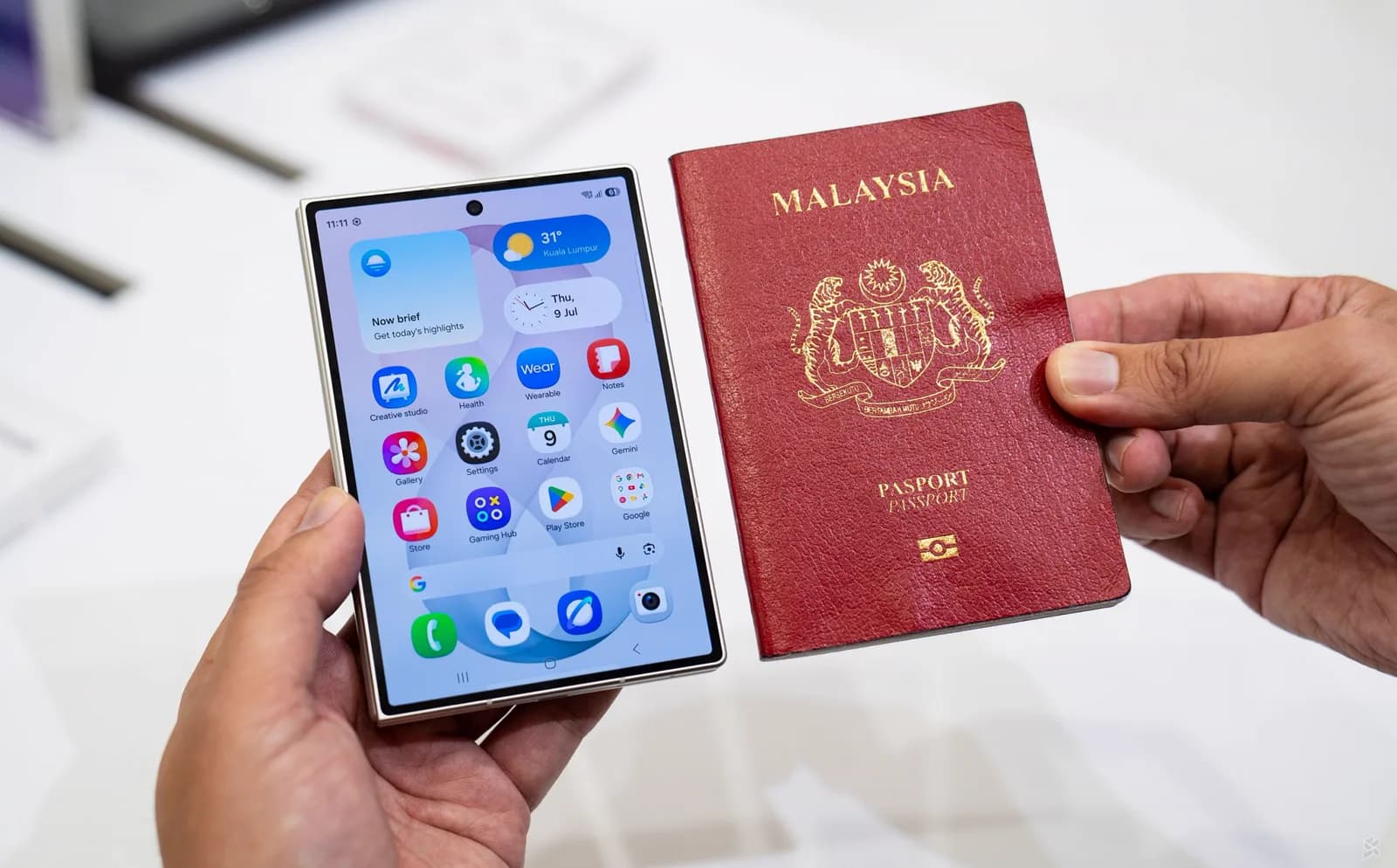
Passport-size foldables, iPhone Duo and Galaxy Z Fold 8 compared
Folded, the iPhone Duo and Galaxy Z Fold 8 are almost the size of a Malaysian passport. Here is what the passport-style design means, the actual dimensions, Malaysian prices from RM7,299 and which one suits you.

Apple Welcome Home event on 13 October, Malaysia time and what to expect
Apple's Welcome Home event on Tuesday, 13 October is expected to start at 9pm Malaysia time. Here is what to expect, including a smart home hub and a new Apple TV 4K and HomePod mini.
AI in Budget 2027, sovereign AI cloud, RM30 million via MDEC and a scam-checking app
A sovereign AI cloud, RM30 million through MDEC for 4,000 MSMEs, an AI app to check for scams and 100,000 free AI subscriptions. Every AI and digital measure in Budget 2027.